Jasper
What Jasper is
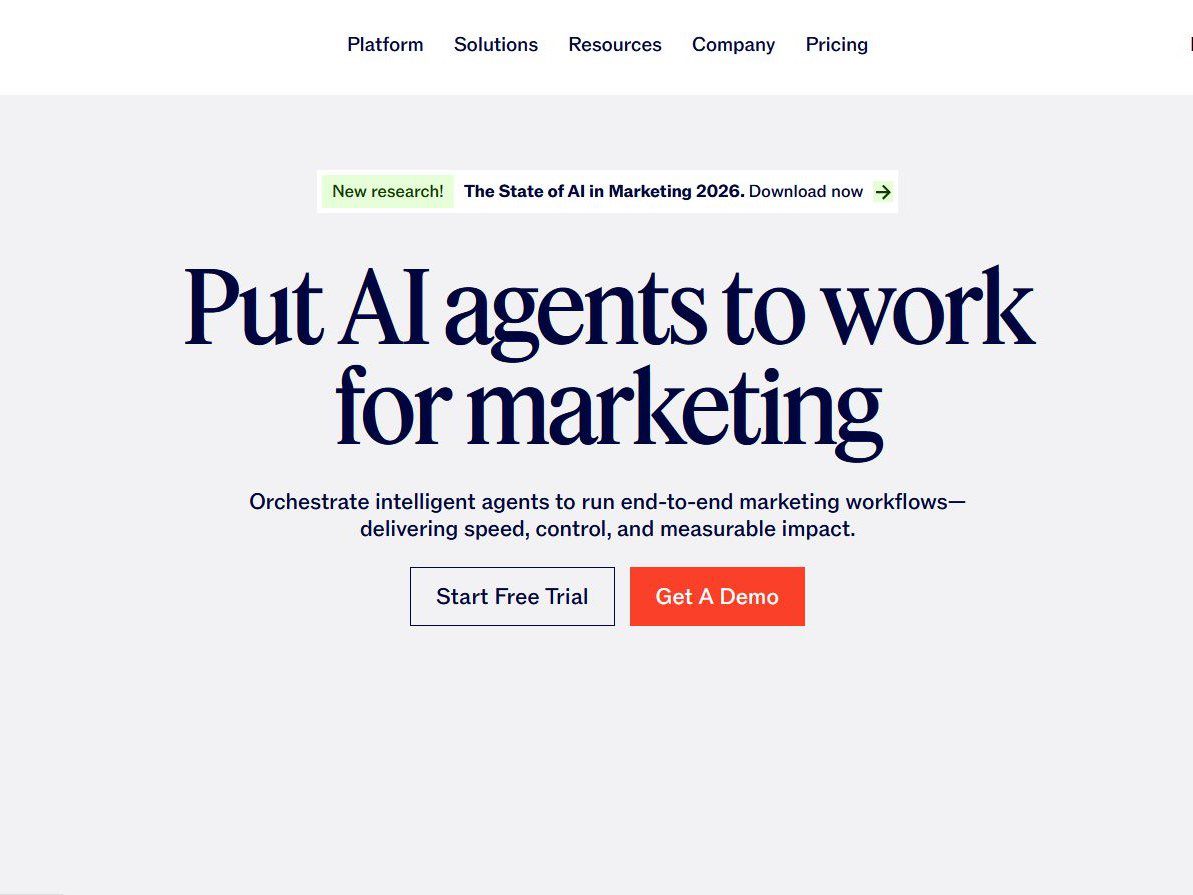
Jasper is an AI content platform built for enterprise marketing teams. Older users remember it as Jarvis, the name it dropped in early 2022 after a trademark dispute. The product has long outgrown the "AI copy generator" label. It now centers on three things, the Canvas editor, a brand voice and knowledge system, and marketing agents that execute workflows. A team loads its brand material once, and subsequent ads, emails, social posts, and web copy stay close to the brand's voice. That is also where it separates itself from general-purpose chat assistants.
The problem it solves is specific. When marketing teams write with a generic AI, the biggest cost is usually the "make it sound like us" pass. Jasper turns brand voice, product facts, and style rules into platform configuration, applies them at generation time, and flags outputs that drift off-voice with suggested fixes. For teams producing across many channels and markets, this genuinely cuts review cycles. The trade-off is price and setup effort, covered below.
Core capabilities
- Brand Voice and Brand IQ Upload existing copy for voice analysis, or configure tone, style, and visual guidelines by hand. Outputs apply them automatically and off-brand passages get flagged.
- Knowledge assets Load product docs, style guides, and image, video, or audio material into Knowledge so generations cite it, which reduces factual hallucination.
- Marketing agents and workflows Purpose-built agents execute end-to-end workflows, including the newer Translation agent plus GEO and deep-research agents. Business plans add a no-code builder for custom agents.
- Canvas and templates A brief-to-draft editor paired with template libraries for ads, email, blogs, and social.
- APIs and MCP Business plans expose Jasper APIs and MCP access to embed generation in your own systems, with a separate Image API.
- GEO and SEO modules Monitor how often AI answer engines cite your brand and produce content optimized for AI search.
Pricing, verified August 2026
The pricing page now lists exactly two plans. The old Creator tier at $39 for individuals is gone.
| Plan | Price | Brand Voices | Knowledge assets | Notes |
|---|---|---|---|---|
| Pro | $59/seat/month billed yearly, or $69 monthly | 2 | 5 | 1 seat, 7-day free trial, Canvas, core marketing agents, 3 audiences |
| Business | Custom quote | Unlimited | Unlimited, multi-modal | SSO/SAML, API access, no-code custom agents, admin audit log, dedicated CSM |
Details that trip people up. Pro includes a single seat, and adding teammates means talking to sales about Business; the FAQ says so directly. Yearly billing saves roughly 20 percent over monthly. PayPal and prepaid cards are not accepted. Cancel anytime and you keep access to the end of the billing cycle without further charges. The "unlimited words on every plan" claim that still circulates in older reviews no longer matches the current pricing page, so budget from the official numbers, not from a 2023 blog post.
A typical workflow
The most common pattern is campaign production at volume. A marketing manager loads the campaign brief, channel requirements, and brand voice, drafts a long-form piece in Canvas, then has agents adapt it into ad variants, emails, social posts, and landing-page copy, all grounded in the knowledge assets. Reviewers see off-voice passages flagged inline, which beats rewriting every line by hand.
A second path is content operations. SEO teams use the research and optimization modules for briefs and first drafts, translators run multi-market versions through the Translation agent, and humans gate facts and compliance before anything ships. Teams that wire the API into their CMS let editors generate inside their own system, so content assets never leave it.
Five practical tips
- Feed it your 3 to 5 best pieces first Voice analysis depends on input quality. Let it learn from copy the team already agrees sounds most like you, rather than writing abstract tone descriptions.
- Put facts in the knowledge base before tone Product specs, pricing language, and competitive positioning are the highest-value assets. Grounding generations in them cuts factual rework more than any style tweak.
- Treat the voice score as a signal, not a verdict A high score means the copy matches your configuration, not that the positioning is sharp. Spot-check outputs periodically so a well-scored profile does not mask generic writing.
- One voice profile per brand Agencies should give each client its own Brand Voice and knowledge set, then name the brand explicitly when generating, so client A's facts never leak into client B's draft.
- Test with a real campaign during the 7-day trial Run one scheduled campaign through it end to end and see if the output clears your review bar before committing to yearly billing.
Limits and risks
Brand voice governs how copy sounds, not whether it is true. It reduces style drift but does not verify claims, trademark use, compliance language, or regional nuance, so the human review gate before publication stays. Generated copy can still invent product details or stale pricing; knowledge assets reduce this, they do not eliminate it.
Understand the billing and permission boundaries early. The single-seat design of Pro means a small team either accepts one person generating while others wait, or negotiates Business. Business pricing is quoted per deal, so real per-seat cost depends on seat count and negotiation. SSO, API access, and audit logs live on Business, so Pro users do not get enterprise governance.
On security, the official pages state SOC 2 Type II certification, compliance with GDPR, CCPA, PCI, and DPA requirements, annual third-party penetration testing, US-based data centers, TLS 1.2+ in transit and AES-256 at rest, plus a commitment not to use customer data for AI model training and not to permit third parties to train on it. Teams with data-residency requirements should confirm deployment options with sales.
What public feedback looks like
Positive discussion clusters around brand consistency and multi-channel output speed, mostly from ad-heavy and content-factory style teams. The recurring complaints are consistent too. Price is steep for individuals and small teams, especially with no cheap entry tier since Creator was retired. Some users argue that as general models improved, the wrapper premium became harder to justify. Others report that output quality tracks how much effort you put into brand configuration, and that a thin setup yields mediocre copy. These are individual reports, not a benchmark. Run your most typical campaign brief through the trial, measure the review time it saves, and check that against the seat price. That is more decisive than any review.
Who should use it, who should not
Good fit. Enterprise marketing departments producing across channels and brands where voice consistency matters, agencies managing multiple client brands, and content operations teams that need governance, SSO, and audit trails.
Poor fit. Individual creators who write occasionally, for whom $59 a seat is hard to justify against a general assistant plus a prompt template. Pure blog-draft SEO shops have cheaper options. Teams with strict data-residency needs and no custom deployment deal should look elsewhere.
Useful links
- Jasper pricing page, the source of truth for plans, trial, and cancellation terms
- Jasper security and compliance page, SOC 2, encryption, and data handling
- Brand Voice product page, Brand IQ and voice flagging
- For alternatives, see Copy.ai for GTM automation, ChatGPT or Claude as general writing assistants, or the fuller Jasper alternatives guide.