Hermes Agent
 Featured tool
 What is Hermes Agent?
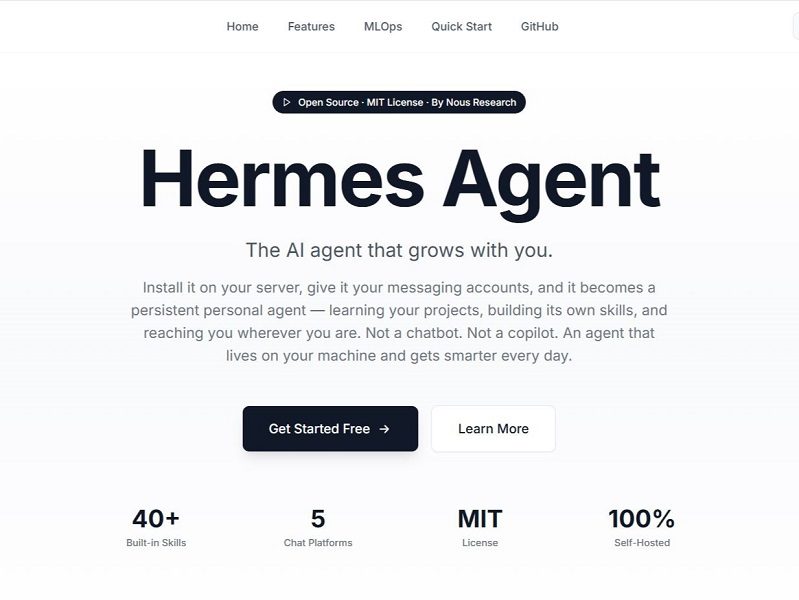
Hermes Agent is an open-source AI assistant from Nous Research designed to do work through tools rather than only answer in a chat box. A deployment can work with files, terminals, browsers, scheduled jobs, research sources, and connected communication channels. It also has skills for reusable procedures and memory systems for retaining useful context across sessions.
That combination makes Hermes Agent closer to an operating environment for an assistant than a single model. The model still matters, but so do permissions, tool definitions, credentials, channel routing, and the quality of the procedure you give it. A capable model with broad terminal access can make a fast mistake; an approval-aware setup with narrow tools is slower to configure but much safer to live with.
Core building blocks
- Skills: local Markdown procedures that package repeatable workflows, requirements, and pitfalls.
- Memory: compact durable preferences and deeper factual recall can reduce repeated setup in long-running work.
- Tools and channels: integrations let an agent read, reason, and act in the places a team already works.
- Scheduling and delegation: recurring jobs and isolated subagents help with monitoring and larger workstreams.
- Guardrails: side-effecting operations can require confirmation, and tool scope can be restricted for a job.
A sensible way to start
Start with one reversible workflow. Examples include a daily research brief, a read-only repository audit, or a draft-only inbox triage. Define the inputs, the destination, the allowed tools, and what must never happen automatically. Run it manually several times, inspect tool output, and only then schedule it.
Keep secrets outside prompts and version-controlled files. Use dedicated credentials with the smallest practical scope. Separate read-only research tools from deployment, billing, deletion, or production-database tools. For a new skill, write exact verification steps and a rollback path. These habits matter more than adding many integrations on day one.
What open-source users discuss
Community interest centers on the ability to self-host, inspect the workflow, use multiple models, and tailor an assistant to a real operating routine. That flexibility is valuable for users who find hosted assistants too rigid. It also brings the usual self-hosted trade-off: installation, provider configuration, browser access, channel permissions, and upgrades require operator attention. GitHub issue reports are especially useful reading before deployment because they reveal the kinds of integration and environment decisions that a quick demo hides.
Hermes Agent is a better fit for someone willing to own that setup than for someone who only wants a zero-configuration chat app. A small VPS and a carefully limited toolset are often a better first deployment than a large, permanently privileged automation stack.
Cost and alternatives
The project is open source. Operating cost comes from the model provider, any enabled external services, and your own compute. Compare it with OpenClaw, LangChain, and other agent frameworks based on channel needs, tool safety, deployment ownership, and how much customization your team can maintain.