Zapier AI
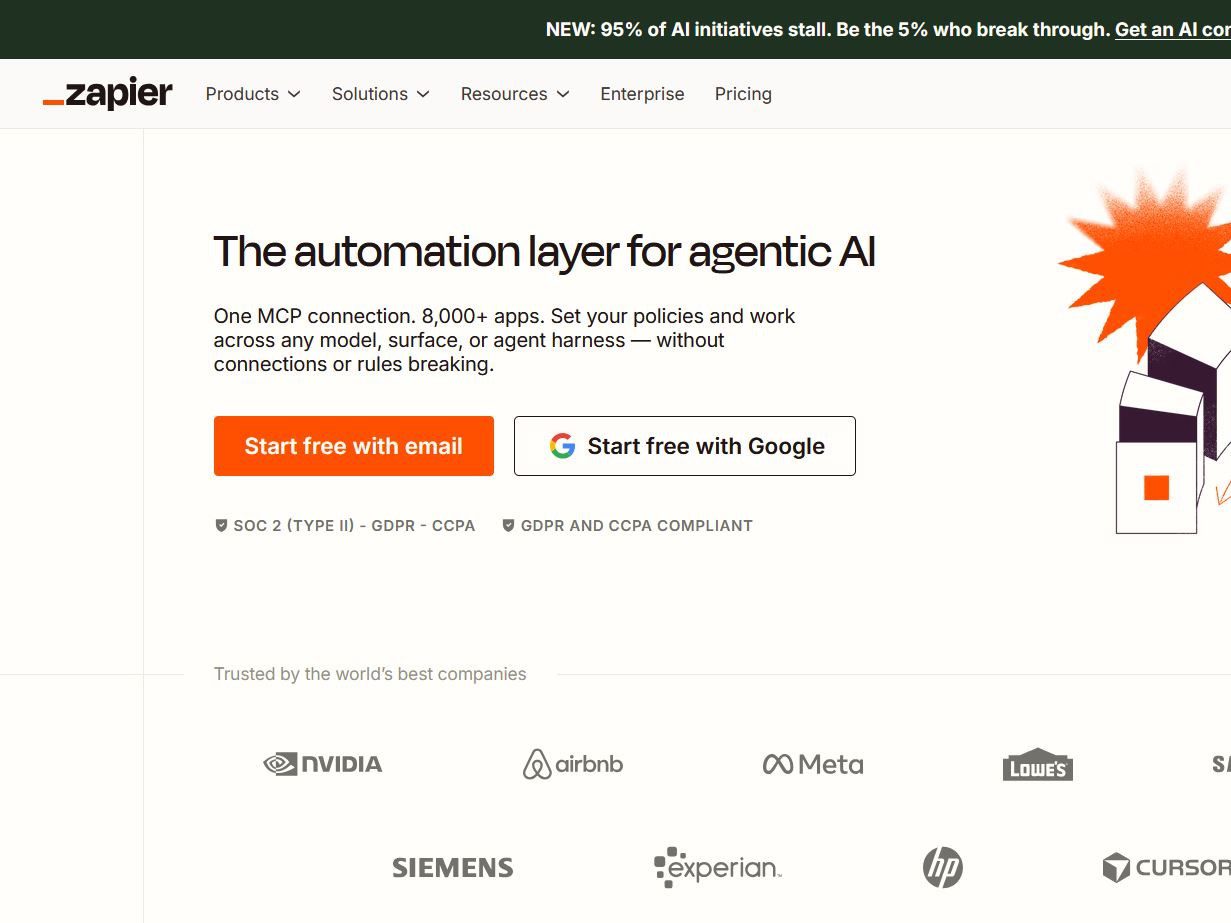
What Is Zapier AI?
Zapier AI is the AI layer inside Zapier, the long-standing workflow automation platform. Instead of only chaining app triggers and actions, it lets you describe what you want in plain language, transform data with AI steps, and add chatbots and agents that act on your business data. It sits on top of thousands of app integrations, so the appeal is breadth plus accessibility: automation that a non-technical operator can build, with code steps available when you need them.
This is a managed, no-code product with a real learning curve hidden behind the promises. It is not open source, and it is not self-hosted. If you need strict data residency or fully custom logic, a code-first tool will fit better.
Key Features
- Natural-language automation — describe the workflow you want in plain English and let it wire the steps
- AI data steps — classify, extract, format, and transform data between apps
- Chatbots and agents — build assistants grounded in your own files, tables, and tools
- Thousands of integrations — connect to most of the tools in a typical stack
- Tables and forms — store and collect structured data without a separate database
- Code and MCP — add Python or JavaScript steps and expose actions to AI assistants
Pricing
Zapier has a free tier that lasts and lets you start for real: $0 per month with 100 tasks a month and two-step Zaps. Paid plans scale from there (as of August 2026). Professional starts at $19.99 per month and adds multi-step Zaps, unlimited Premium apps, and webhooks. Team is $69 per month and brings 25 users, shared workflows, and SSO. Enterprise is custom pricing for larger organizations. Tasks are shared across your whole account, so powerful AI steps and code cost more tasks than a simple two-step Zap. See the Zapier pricing page for current tiers.
Limitations and Trade-offs
The task model can surprise you. Every step, connector call, and AI action draws from the same account pool, so a workflow that uses a heavy model or long-running code can burn tasks quickly. Costs are easier to budget than some rivals but still opaque when AI steps multiply.
You are also renting the platform. There is no self-hosting, no way to run workflows on your own infrastructure, and you depend on Zapier's pricing and feature changes. Complex branching that needs fine control is harder here than in an open workflow engine. And an automation that touches sensitive business data lives in a third-party system, which some organizations find unacceptable.
Who Should Use Zapier AI?
Marketers, ops leads, and small-business owners who move data between SaaS tools every day are the core audience, since they want results without writing code. Teams that need a chatbot fed by their own content get a fast path to a working prototype. Non-technical operators in sales or support automate the repetitive handoffs between their tools. Developers use it for quick, durable integrations without building and hosting an API.
It is the wrong choice for anyone who wants their automation logic on owned infrastructure or under version control.
Zapier AI vs Alternatives
Zapier's edge is the number of integrations and the pace at which a non-developer can ship something useful. The trade-off is that you live inside a managed platform, and task-based pricing grows with complexity. Compare it against a self-hosted, code-first agent platform such as Dify if your requirements lean toward control, custom tooling, and running on your own cloud; that path costs more setup but keeps your logic and data at home. Pick Zapier when speed and prebuilt connectors matter more than sovereignty.